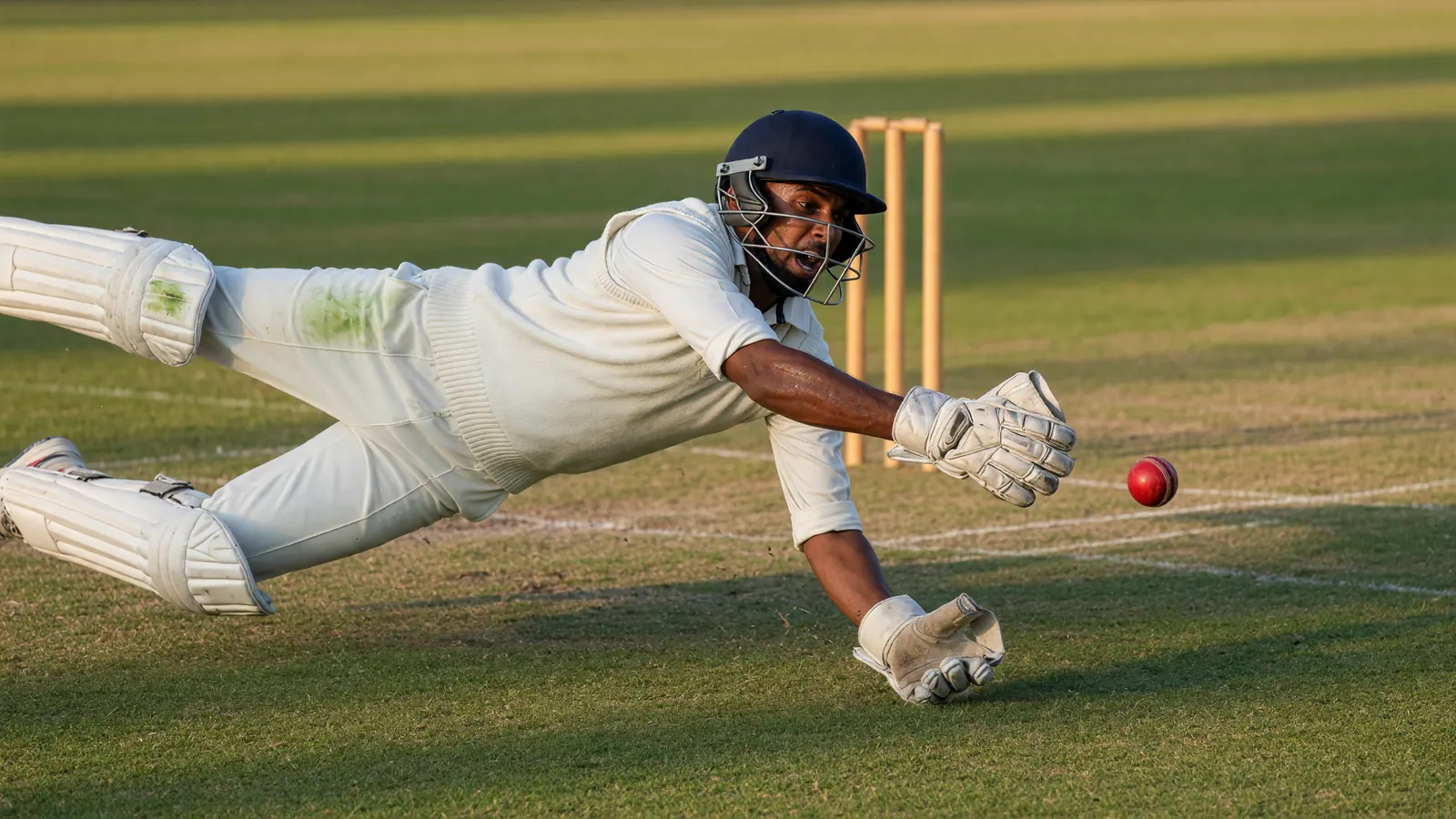
Player roles, in fantasy terms
| Role | What fantasy rewards | Captain ceiling |
|---|---|---|
| Top-order batter (1-3) | Strike rate, boundary count | Consistent, ceiling-bounded |
| Middle-order batter (4-6) | Time at crease, milestones | Highest ceiling |
| All-rounder | Wickets + batting milestones | Dual ceiling |
| Wicketkeeper | Catches, stumpings, late-order batting | Death-overs bat + dismissals |
| Pace bowler | Wickets, economy in powerplay/death | Day-1 movement |
| Spinner | Wickets, economy in middle overs | Spinning track |

Why last-five is more predictive than the season
A player in their last five innings is more predictive of the next innings than the season average. The form window matters because it captures fitness, role, and the venue pattern. A player averaging 45 over a season but with three ducks in the last five is a yellow-flag captaincy pick.
Matchup matters more than form
A batter in form against a bowler they consistently dominate is worth more than the same batter in form against a bowler they struggle against. Matchup history is a more predictive factor than the season aggregate.
Continue
Read the player. Read the form.
Role, last-five, matchup. The three-check captain pick.
18+ · Eligibility varies by location · Paid contests involve financial risk
Extended player-index framework
The player index is a working view, not a database. The index is updated when the editorial desk publishes a new captaincy read or tips piece that changes the role pattern or the last-five form. Players who appear in the index appear because a published piece put them on the radar; the index does not cover every international player.
The role classification
Players are classified by their primary role at the international and franchise level. Top-order batters (positions 1-3), middle-order batters (positions 4-6), all-rounders, wicketkeepers, pace bowlers, and spinners. The role classification is the entry into the captaincy math; the last-five form is the multiplier.
The last-five form
The last-five form is more predictive than the season average. A player averaging 45 over a season but with three ducks in the last five is a yellow-flag captain pick. The form window matters because it captures fitness, role, and venue pattern.
The matchup history
The matchup history is the second-most predictive factor. A batter in form against a bowler they consistently dominate is worth more than the same batter in form against a bowler they struggle against. The head-to-head is the deciding factor; the last-five is the tie-breaker.
The venue pattern
The venue pattern is the third-most predictive factor. Some grounds favour spinners; some favour pace. Some are batting paradises. One or two recent matches at the venue tell you enough.
The captain ceiling
The captain ceiling is the highest single-match fantasy score a player can produce. Top-order batters have a consistent ceiling; middle-order batters have a higher ceiling; all-rounders have a dual ceiling; wicketkeepers have a death-overs ceiling. Pick the captain with the ceiling that matches the venue pattern.
Long-term player monitoring
Long-term players re-verify the player index every week. The re-verification is a quick scan of the captaincy patterns, the last-five form, and the matchup history. The re-verification takes 15 minutes and catches most of the drift that happens between published pieces.