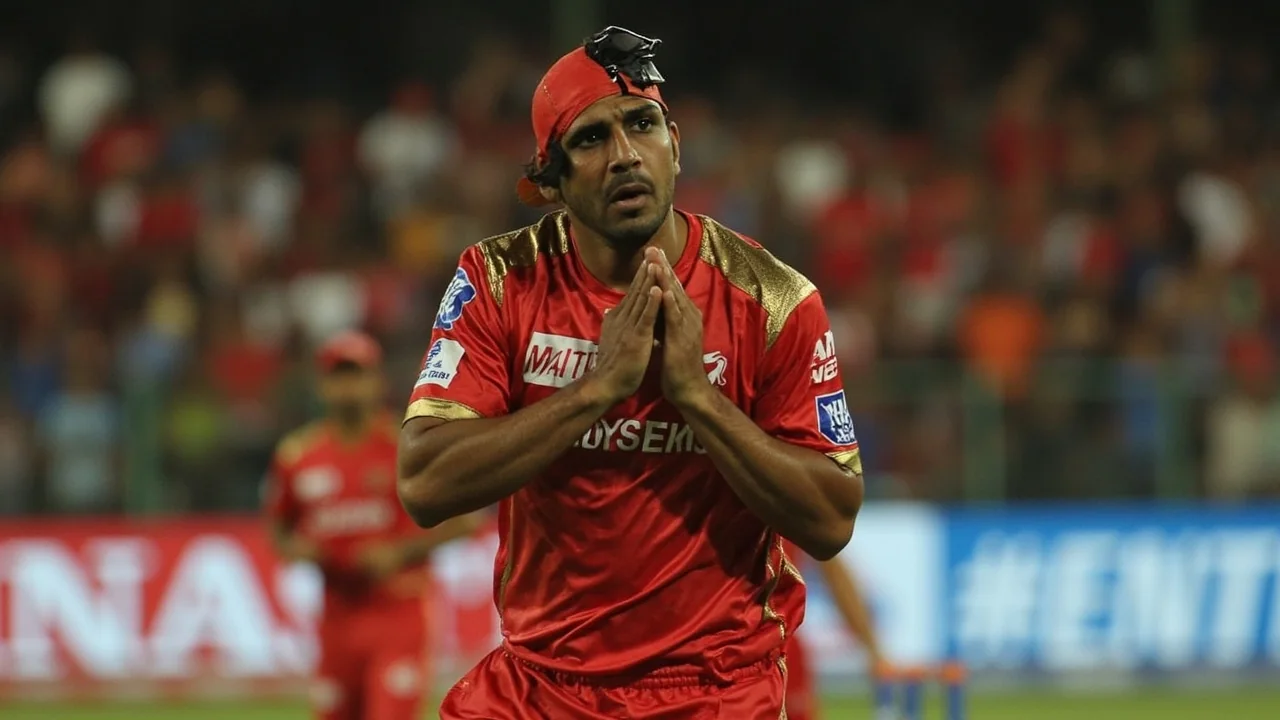
What happened, and where things stand today
All-rounder Shashank Singh has switched state affiliation from Chhattisgarh to Puducherry for the upcoming domestic season, ending months of visible tension between the player and the Chhattisgarh State Cricket Sangh (CSCS). The break is now formal: the CSCS has issued his No Objection Certificate, and the dues on both sides are settled enough for the move to clear the administrative line.
The CSCS has declined to comment further on the player's allegations, saying only that the NOC had been issued. That is the same posture the association has held throughout the dispute: process the paperwork, decline the back-and-forth. Shashank, by contrast, has spoken at length. In an interview with ESPNCricinfo, he said he was excluded from the 2026 Chhattisgarh Cricket Premier League and from the state probables' conditioning camp without a proper explanation. The exclusion pattern, in his account, runs back through the white-ball domestic season, where he was told he was not committed enough to the longer formats he had been asked to play. That is the substance of the clash: not a single incident, but a sequence of squad decisions he felt were made without a fair hearing.
The PBKS vice-captain, and the IPL 2026 read
For fantasy cricket players, the most relevant line on Shashank Singh's CV sits in the IPL column, not the domestic one, and his franchise arc tracks cleanly through the IPL 2026 calendar at Punjab Kings. He rose to fame in IPL 2024 as a finisher for Punjab Kings, batted through the kind of late-innings cameos that turn contests in the last two overs, and was retained by the franchise ahead of IPL 2025. He is the current vice-captain of PBKS under Shreyas Iyer, and he helped the franchise reach the 2025 final, where they finished runners-up to Royal Challengers Bengaluru.
All of that is intact. The state-association move does not change his IPL contract; it changes only which domestic side he turns out for in the Ranji Trophy and the white-ball competitions. For the broader IPL 2026 picture, the relevant question is how the PBKS think tank will handle a player who is openly angry about being sidelined by his state body going into the next domestic season. That kind of friction, when it travels back into the IPL squad, can either harden the case for a player (he has a point to prove) or soften it (the front office prefers its narrating players to be playing, not litigating). The most likely outcome from the PBKS side is patience: the franchise has invested in Shashank since 2024, the vice-captaincy is a public signal, and the IPL roster has room for a finisher who can also bowl a few overs of seam-up if needed.
The BCCI award that frames the dispute
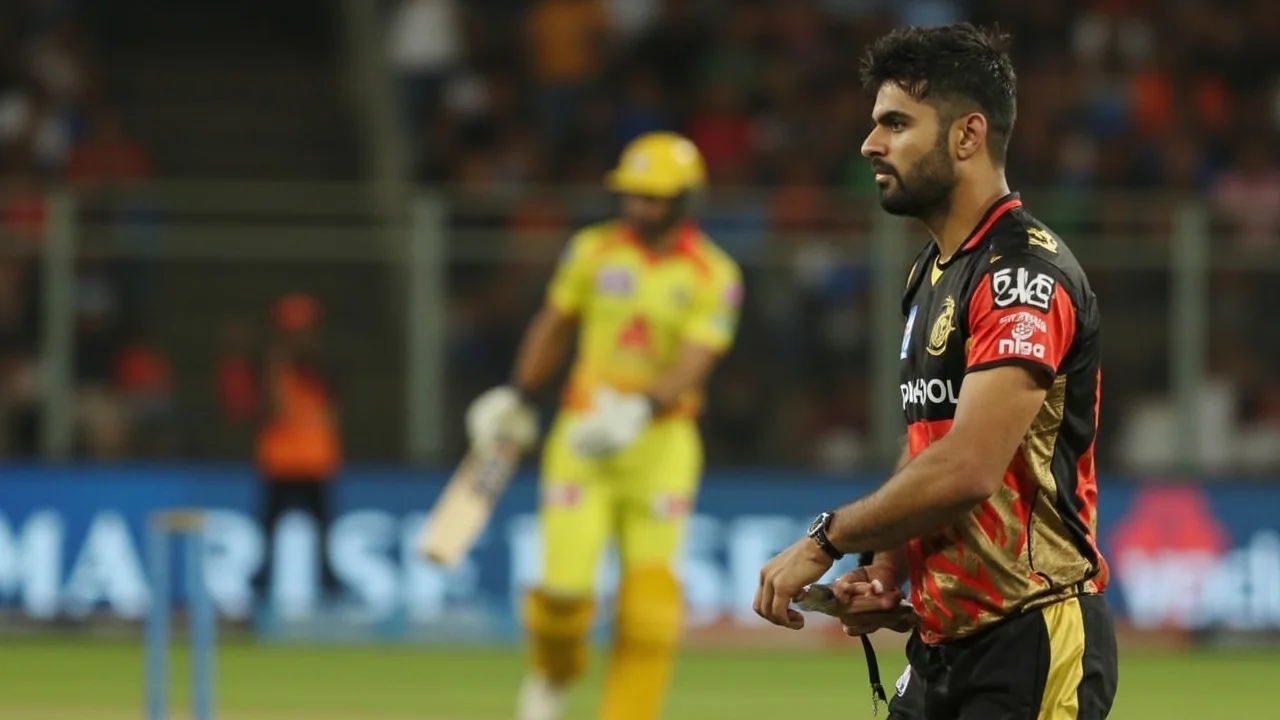
There is a sharper way to read the dispute than the public back-and-forth. Shashank Singh won the BCCI award for the best domestic white-ball all-rounder for the 2023-24 season. That award is the official recognition that across the BCCI's domestic calendar, he was the most impactful white-ball all-rounder in the country. It is the line on his CV that the Chhattisgarh association cannot write around, and it is the line that makes the alleged exclusion from the 2026 Chhattisgarh Cricket Premier League hard to defend on a cricketing basis.
Read the dispute from that angle and the gap between the player's claim and the association's silence is the whole story. The CSCS has not contested the claim. It has not said he was excluded for a cricketing reason. It has not released any minutes, any selection committee notes, or any squad rationale. The default explanatory outcome of a state association that processes the NOC without contesting the underlying allegation is the same one a careful reader would arrive at without prompting: the association knew the move was coming, did not want a public argument on the way out, and chose procedural closure over public rebuttal.
The Ranji Trophy shoulder injury that started the public split
The chronology of the dispute starts on a cricket field, not in a press note. During the Ranji Trophy 2025-26 season, Shashank went off the field with a shoulder strain while fielding against Mumbai. That was the moment the public version of the dispute began. A player who leaves the field mid-match is, by definition, a player who has chosen his health over the contest; the rest of the squad, the selectors, and the association usually read that choice in a particular way. The shoulder strain was the first datapoint.
The second datapoint, in Shashank's account, was the accusation that he was not committed enough during the white-ball domestic season. A player who has just gone off the field with a shoulder injury is, by the same logic, vulnerable to that accusation: the absence reads as a precedent, and the next absence is read through the same lens. The dispute is then not a single decision to exclude him from the 2026 Chhattisgarh Cricket Premier League. It is a layering of interpretations, where each subsequent selection call is read by both sides through the previous one. By the time the conditioning camp exclusion arrived, the framing was already settled: a player who had been hurt, had been told he was not committed, and had been left out of the next squad on both counts.
What the Puducherry move changes for the state roster
For Puducherry, the move is a low-cost, high-upside acquisition. The Puducherry domestic side plays a lighter fixture calendar than Chhattisgarh does, and the white-ball T20 competitions are where a finisher of Shashank's profile compounds value match by match. He is 33 years old. He has said publicly that he plans to focus on white-ball cricket in the upcoming domestic season to regain consistency after a disappointing IPL 2026. That is the right kind of focus for a player in his position: red-ball cricket is grinding, the white-ball calendar is short, and the format the franchise pays him for is the format he is now committing to play in the domestic calendar.
For Chhattisgarh, the cost is mostly symbolic. The state association has lost the player who, until recently, carried the most prestigious cricket award on the domestic circuit. The replacement calculation is not a like-for-like one; there is no in-house all-rounder in the Chhattisgarh pipeline with a BCCI award. What Chhattisgarh gains is the closure of the public dispute and the freedom to plan the next domestic cycle without an ongoing argument running in the background. That is a real, if quiet, gain.
What fantasy players should actually do with this
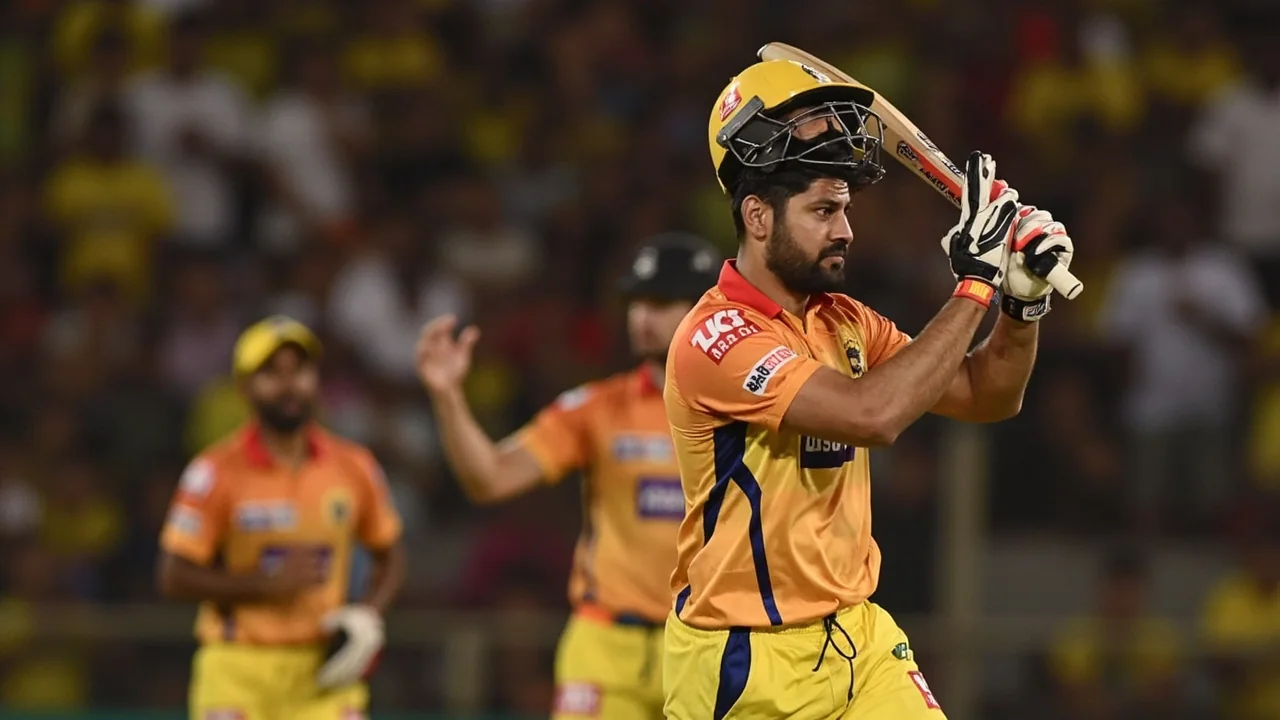
For a fantasy cricket team, the practical read is short. The state-association move does not change the IPL 2026 sheet for Shashank Singh. It changes only the domestic sheet, and the domestic sheet is not the sheet the IPL fantasy roster is built from. The captain pick at the PBKS all-rounder slot is still a role, venue, and opposition question; it is not a state-association question.
The longer read is more interesting. A player who has just been through a public dispute with a state association, who has publicly levelled allegations of neglect and disrespect, and who has chosen to move rather than contest, is a player whose motivation is unusually legible. The fantasy-relevant signal is plain: he is playing for white-ball match time, he has a BCCI award that says he is the best white-ball all-rounder in the country at his level, and the IPL 2026 cycle is the place he wants to make the next statement. That is a captain pick that compounds, not one that decays. The right way to use it is in the slot where the contest comes down to a finisher on a turning third-man rope, not at the top of the order.
The discipline is the same we apply to every other domestic-side dispute: do not pre-load the IPL roster on the strength of a single news cycle, do not retroactively rewrite the player's T20 numbers because a state association has lost him, and do not let the headline rewrite the role profile. Read the dispute for what it says about motivation, then put the player back in the slot the role profile says he belongs in.
What the dispute signals for the wider domestic circuit
State associations in Indian domestic cricket carry a degree of discretionary power that is unusually high by international standards. Squad selection, probables' conditioning camp access, IPL release timing, and NOC processing all sit inside the same set of bureaucratic decisions. When a player the calibre of a BCCI award winner leaves a state association and the public framing is "disrespect", the case is read across the player base. Other players in the same pipeline will read the move as evidence that the discretionary power is real, that the consequences for the association are limited, and that the practical protection a player has is the public airing of the dispute rather than any internal mechanism.
There is no reform proposal to write here. The editorial position is the position we hold across the rest of the site's domestic cricket coverage: the system has the inequality it has, and the player who loses the most in any state-association dispute is the player who refuses to play it out in public. Shashank Singh has chosen the public path. The Puducherry move is the result.
What to watch next
Three concrete signals will tell fantasy players whether the dispute has settled cleanly or whether it is still smouldering. First, the Puducherry domestic squad announcement for the upcoming white-ball season — whether Shashank is named in the probables list, and at what batting position. Second, the PBKS pre-auction retention signal for IPL 2027 — whether the franchise continues to back the vice-captaincy he currently holds, or whether the front office moves the vice-captain band onto a different player. Third, his first competitive innings for Puducherry in the upcoming domestic calendar — the captaincy math at the all-rounder slot is a role question, not a jersey-colour question, but the first innings at the new state association is the first public data point the next round of fantasy captain picks will be built on.
For our news desk, the story sits in the same drawer as the other squad-shape reports we have covered this season. We will update the report when the Puducherry squad is announced, when the PBKS retention signal is public, and when the first innings arrives. The captain pick at the all-rounder slot remains a venue-and-role question; the state-association move is a motivation signal that should be read once and then folded into the role profile, not the other way around.