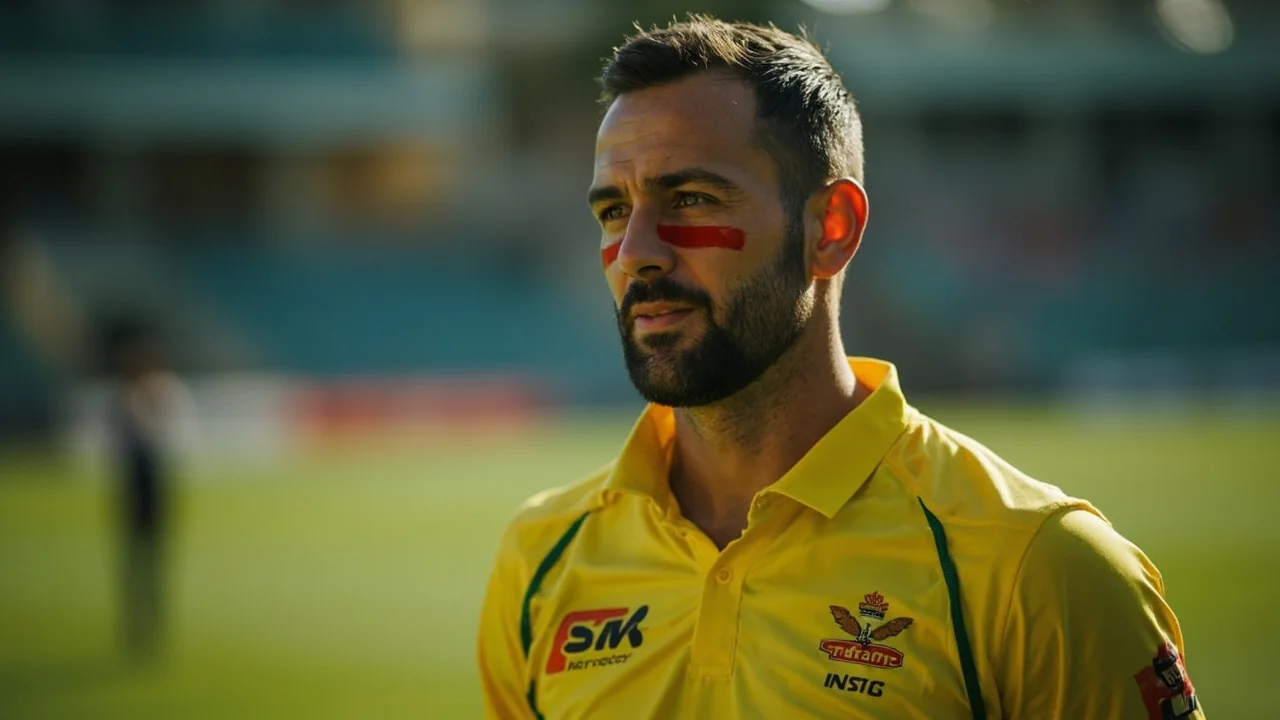
A 12-month Test schedule, an IPL window in the middle, and a coach who has to choose
Australia begin a 12-month run of 20 Tests and 14 white-ball games in Darwin and Mackay, and that run is the shape of every fantasy captaincy decision through to the back end of 2027. On 8 August 2026, head coach Andrew McDonald told Cricinfo that tough decisions may be needed about which Test players go to IPL 2027, because the tournament sits between two five-Test series on either side of an Ashes tour. The 12-month block includes six ODIs in Zimbabwe and South Africa, three Tests in South Africa, eight white-ball games at home against England, four home Tests against New Zealand, a five-Test tour of India, a one-off 150th-anniversary home Test against England in March, and a five-Test Ashes tour of England in June and July, with a possible World Test Championship final also on the table.
The IPL piece is one slice of a longer red-ball picture, and that is the angle a Test cricket fantasy read should hold. IPL 2027 is bracketed by five-Test series on both sides, with an Ashes tour and a possible WTC final at the back end, and the franchise decisions Australia make on retention and auction later in 2026 directly shape which fast bowlers turn up to which Test series at full fitness. The fantasy read is not "who plays IPL"; the fantasy read is "who turns up to the Border-Gavaskar and the Ashes with eight-week strength blocks already in the bank".
The rest of this explainer breaks that read into four parts. First, the calendar arithmetic that frames McDonald's call. Second, the five first-choice players whose IPL decisions quietly drive the Test workload conversation: Pat Cummins, Mitchell Starc, Josh Hazlewood, Cameron Green and Travis Head, with Josh Inglis in the mix as ODI wicketkeeper and Test back-up. Third, the precedent from the last IPL cycle, when Delhi Capitals, Royal Challengers Bangalore and Sunrisers Hyderabad were frustrated when Starc, Hazlewood and Cummins arrived late while managing injuries under Cricket Australia guidance. Fourth, the WTC and fantasy read-through, with the captaincy math that holds regardless of which franchise call lands.
The 12-month calendar that frames the call
Twenty Tests in a year is a heavy number, but the structure matters more than the total. Five of those Tests sit in a three-Test series against South Africa in November, four sit in a home series against New Zealand in the new year, five sit in the Border-Gavaskar tour of India in the new year window, one sits in a one-off 150th-anniversary home Test against England in March, and five sit in the Ashes tour of England in June and July. The WTC final, if Australia qualify, adds a sixth Test in the back half of the window. The IPL sits in the gap between two of those five-Test series.
That arrangement is the load that the coach is planning against, and the reason McDonald's framing matters for fantasy. A Test all-rounder who goes to the IPL and returns in time for the Border-Gavaskar carries 5+5+1 = 11 Tests of red-ball work into the back half of the year, with one possible WTC final on top. A specialist quick who skips the IPL and stays on the strength and conditioning programme for eight weeks carries the same fixture list but with fresher legs. The two paths produce different fantasy returns at the Ashes, even if they look identical on the IPL auction page.
The white-ball layer also matters. The 14 white-ball games include six ODIs split between Zimbabwe and South Africa, and eight home games against England. The ODI fixtures are the ones that pull the same fast-bowling pool away from red-ball rest. National selectors left Cummins, Starc, Hazlewood and Head out of two white-ball tours of Pakistan and Bangladesh immediately after the IPL last year so they could rest and prepare for the upcoming heavy schedule. The pattern is not new, but the scale of the 2026-27 calendar makes the rest windows more valuable than the fixtures themselves.

The five first-choice players whose IPL decisions quietly drive the Test workload conversation
Five of Australia's first-choice Test and ODI players are currently on IPL lists: Pat Cummins, Mitchell Starc, Josh Hazlewood, Cameron Green and Travis Head. Josh Inglis, the ODI wicketkeeper and Test back-up, is part of Lucknow's current squad. These six names are the practical boundary of McDonald's "tough decisions" framing. None of them is a fringe player; every one of them is a Test first-choice in helpful conditions and a Test match-winner on a flat track.
The captain's decision is the upstream cause of the workload plan. Pat Cummins' Test captaincy runs through the five-Test India tour and the Ashes; his IPL franchise is Sunrisers Hyderabad. Mitchell Starc's IPL franchise is Delhi Capitals. Josh Hazlewood's IPL franchise is Royal Challengers Bangalore. Cameron Green's franchise position is part of the auction that runs later in 2026, and Travis Head's is settled at Sunrisers Hyderabad. The franchise conversations and the national conversations sit in different rooms, but the same bodies are the subject of both.
The ODI workload layer is the third axis. The same fast-bowling pool plays the six ODIs in Zimbabwe and South Africa and the eight home white-ball games against England. If the IPL plus the ODI calendar leaves a fast bowler with one rest window of fewer than eight weeks before the Border-Gavaskar tour, the workload risk for the Ashes is real. McDonald's specific point in the Cricinfo interview is that finding eight-week strength and conditioning breaks for Australia's aging quicks has been critical to their ongoing fitness, and that Ashes management is particularly crucial. The eight-week figure is the lever, not the IPL itself.
The IPL is, in McDonald's framing, part of Australia's management plan for many players. He told Cricinfo the IPL exposes Australia's top talent to what he called the best T20 competition, while stressing the need to balance that exposure against workload. The exposure argument is genuine: the IPL is the highest-context T20 league in the world, and a Test bowler who plays seven or eight IPL matches at high intensity sharpens his death bowling and his slower-ball options. The workload argument is also genuine: a Test fast bowler who plays seven or eight IPL matches at high intensity arrives at the next Test series with fewer overs in the tank. The two are not contradictory, and the schedule does not let a coach optimise both.
The last IPL cycle, the late arrivals, and the workload precedent
The last IPL season was a worked example of the workload decision in practice. Delhi Capitals, Royal Challengers Bangalore and Sunrisers Hyderabad were frustrated when Starc, Hazlewood and Cummins arrived late to the tournament while managing injuries under Cricket Australia guidance. The franchises wanted their overseas stars on day one. The national programme wanted the same stars fit for the Test summer that followed. The compromise was late arrivals and managed workloads, and the consequence was visible in the IPL standings: the three franchises paid full auction prices for partial availability, and the Australian bowlers carried lighter IPL workloads into a Test summer that included the Border-Gavaskar and the WTC cycle.
The compromise was not free. Starc, Hazlewood, Cummins and Head were all left out of two white-ball tours of Pakistan and Bangladesh immediately after the IPL so they could rest and prepare for the upcoming heavy schedule. The rest windows were bought at the cost of two ODI series each. The 2026-27 schedule is heavier than the 2025-26 schedule by five Tests, so the cost of the same compromise in the next cycle is higher. McDonald's bracing in the Cricinfo interview is, in part, the coach saying publicly that the cost of the same compromise a second time may be too high.
The retention and auction decisions for IPL 2027 are slated for later in 2026, and that timeline matters. The franchises will price their retention lists before Australia has played the South Africa and New Zealand Test series that bracket the IPL window. The franchise model wants certainty on overseas availability. The national programme wants optionality on workload. The two objectives are not perfectly aligned, and McDonald's interview is the public acknowledgement of that gap, not a specific player call. The call comes later, in the retention meeting and the auction room.
The WTC and fantasy captaincy read-through
The fantasy read sits on top of the WTC cycle. Each bilateral Test series feeds into the WTC table. The standings shape declarations, follow-on decisions and team selection, and a Test series that looks like a dead rubber on paper can matter for WTC points percentage. The 12-month window includes three Test series that almost certainly matter for the WTC table: the Border-Gavaskar in India, the home Test against England in March, and the Ashes. The fixture that most often gets called a dead rubber is the New Zealand series, but a slow start to the cycle in South Africa can change that read before the first ball is bowled at home.
The captaincy math that holds across all four reads is conservative. The Test all-rounder who bowls 20 overs and bats at five or six remains the safest captain pick across the 12-month window. The ceiling pick is the specialist fast bowler on a turning subcontinent track, but the ceiling pick is also the most exposed to the IPL decision. A fantasy captain who picks the specialist fast bowler every Test is implicitly betting that Australia will hold the bowler back from IPL 2027. A fantasy captain who picks the all-rounder every Test is implicitly betting that workload management will not affect the all-rounder's availability.
The differential pick is the ODI wicketkeeper who is also a Test back-up. Josh Inglis at Lucknow is the relevant example: he plays ODI cricket and sits on the Test bench, and the IPL decision for him is a workload decision for the ODI calendar, not the Test calendar. A fantasy captain who treats the ODI wicketkeeper as a Test differential is hedging the workload risk of the fast bowlers. The hedge is small in any single Test, but it compounds across 20 Tests and 14 white-ball games, and that is the scale the 12-month window is built on.
A reading frame for the next retention call
Six small checks, in order, before you lock a Test fantasy captaincy plan through the 12-month window. First, read the next retention list. The IPL franchises announce retentions later in 2026, and the overseas list is where the Australian fast bowlers sit. Second, read the auction timing relative to the South Africa and New Zealand Test series. An auction that closes before the first Test gives the franchise certainty; an auction that closes after the first Test gives the national programme optionality. Third, read McDonald's next public comment on the eight-week rest window. The number has been the lever in the Cricinfo interview, and any change to it is a signal about workload priorities.
Fourth, read the named-squad announcements for the South Africa and India tours. A Test fast bowler who is rested from the ODI leg of a tour is a workload signal for the next Test series. Fifth, read the all-rounder's IPL franchise and last IPL workload. Cameron Green and Travis Head are the relevant names; a heavy IPL workload for either is a workload signal for the next Test series. Sixth, read the WTC table after each bilateral series. A Test series that looks like a dead rubber on paper can matter for WTC points percentage, and the captaincy math should follow the table, not the calendar alone.
The reading frame is for the fantasy captain who plans across the whole 12 months, not the fantasy captain who picks one match at a time. McDonald's bracing is the public acknowledgement that the 12-month plan has to be built in advance, and the fantasy plan built in advance survives the workload calls better than the plan rebuilt every Test. The IPL is one input among several; the workload arithmetic is the framework; the WTC table is the scoreboard; the Test series that come next are the fixtures.
What to watch between now and the next retention call
Three verifiable signals will sharpen this read before the next IPL retention announcement lands. First, Cricket Australia's announcement of the South Africa and New Zealand Test squads in October, and whether any of the five first-choice fast bowlers are named for the ODI leg of the same tours. A Test fast bowler rested from the ODI leg is a workload signal for the Test series. Second, the BCCI's confirmation of the Border-Gavaskar schedule, which fixes the red-ball workload window for Australia's pace battery in the back half of the window. Third, the IPL retention list announcement in late 2026, and whether Cummins, Starc, Hazlewood, Green and Head are retained, released or traded.
The next retention call is the single most important workload signal in the 12-month plan. A retention that holds all five names in place is a workload compromise Australia has decided to repeat. A retention that releases one or two of the five is a workload call that prioritises the Test summer over the IPL. Either outcome has a fantasy read-through, and the read-through is sharper when the calendar arithmetic is kept in front of the captain pick. The 12-month block has 20 Tests and 14 white-ball games. The IPL is the window in the middle. The WTC final is the possible sixth Test at the back end. The fantasy captaincy should hold all four of those in view.
Watch the retention announcement when it lands. Watch the named Test squads for the South Africa and New Zealand tours when they are confirmed. Watch the WTC table after each bilateral series. The three signals, taken in order, are the deterministic inputs to the 12-month fantasy plan. The output is the captain pick; the input is the framework McDonald laid out in the Cricinfo interview on 8 August 2026. The Test is the long-form format. The IPL is a window inside it. The Ashes is the back end of the window. The workload arithmetic is the part that decides which bodies turn up to which Test series at full fitness, and the WTC table is the part that scores it.
Frequently asked, briefly answered
Why is IPL 2027 a workload issue for Australia in 2026? Because IPL 2027 sits between two five-Test series on either side of a 12-month block that includes 20 Tests, 14 white-ball games and a possible WTC final. The same fast-bowling pool plays Test cricket, ODI cricket, and IPL cricket, and the calendar does not let a coach optimise all three at once.
Which five first-choice players are on IPL lists? Pat Cummins (Sunrisers Hyderabad), Mitchell Starc (Delhi Capitals), Josh Hazlewood (Royal Challengers Bangalore), Cameron Green (auction position pending) and Travis Head (Sunrisers Hyderabad). Josh Inglis, the ODI wicketkeeper and Test back-up, is at Lucknow.
What did the last IPL cycle look like for these players? Delhi Capitals, Royal Challengers Bangalore and Sunrisers Hyderabad were frustrated when Starc, Hazlewood and Cummins arrived late to the tournament while managing injuries under Cricket Australia guidance. National selectors then left the same four players out of two white-ball tours of Pakistan and Bangladesh so they could rest.
When do the IPL 2027 retention and auction decisions land? Later in 2026, ahead of the next IPL season. The exact dates depend on the BCCI's annual calendar, and Cricket Australia's workload planning depends on those dates relative to the South Africa and New Zealand Test series.
What is the eight-week figure McDonald mentioned? The eight-week strength and conditioning break is the rest window McDonald's programme has tried to build around Australia's aging fast bowlers. The figure is the lever, not the IPL itself; the argument is that eight-week rest blocks keep the quicks fit through the full 12-month calendar.
A note on this read
This is a retrospective on Andrew McDonald's 8 August 2026 interview with Cricinfo, written for the Test cricket desk at GoPlay11. The 12-month calendar arithmetic, the five first-choice IPL players, the late-arrival precedent from the last IPL cycle, the white-ball tour rest pattern, and McDonald's eight-week rest framing are all sourced from the same Cricinfo report. The WTC read, the fantasy captaincy framework, the differential read on Josh Inglis, and the six-check reading frame are thinking tools derived from those verified facts. The captain pick, the retention call, and the Border-Gavaskar schedule are downstream events that will sharpen the read when they happen.
For the broader Test cricket read on scoring tables, captaincy in red-ball cricket, the WTC cycle, and the long-form playbook, visit the Test cricket desk.